
Ground Up Initiative: A Monument to Human Cooperation
Note: The following account mentions Bingyu a lot. That's because he's the one who took us on a tour, and it's narratively convenient for me to highlight his role. But everything that I say about Bingyu equally applies to Mei and all their other collaborators at GUI.
It's easy to be overwhelmed by everything that's going on in the world today. There seem to be many forces beyond our control. A recent visit to Ground Up Initiative gave me a lesson in perspective that I'd like to share.
I visited GUI's new site for the first time on 10 January 2026. Before going into the site proper, Bingyu (GUI's self-effacing President) took us to the fourth floor of the neighbouring HomeTeamNS Khatib building, where we could get an overview of the GUI site and its environs.
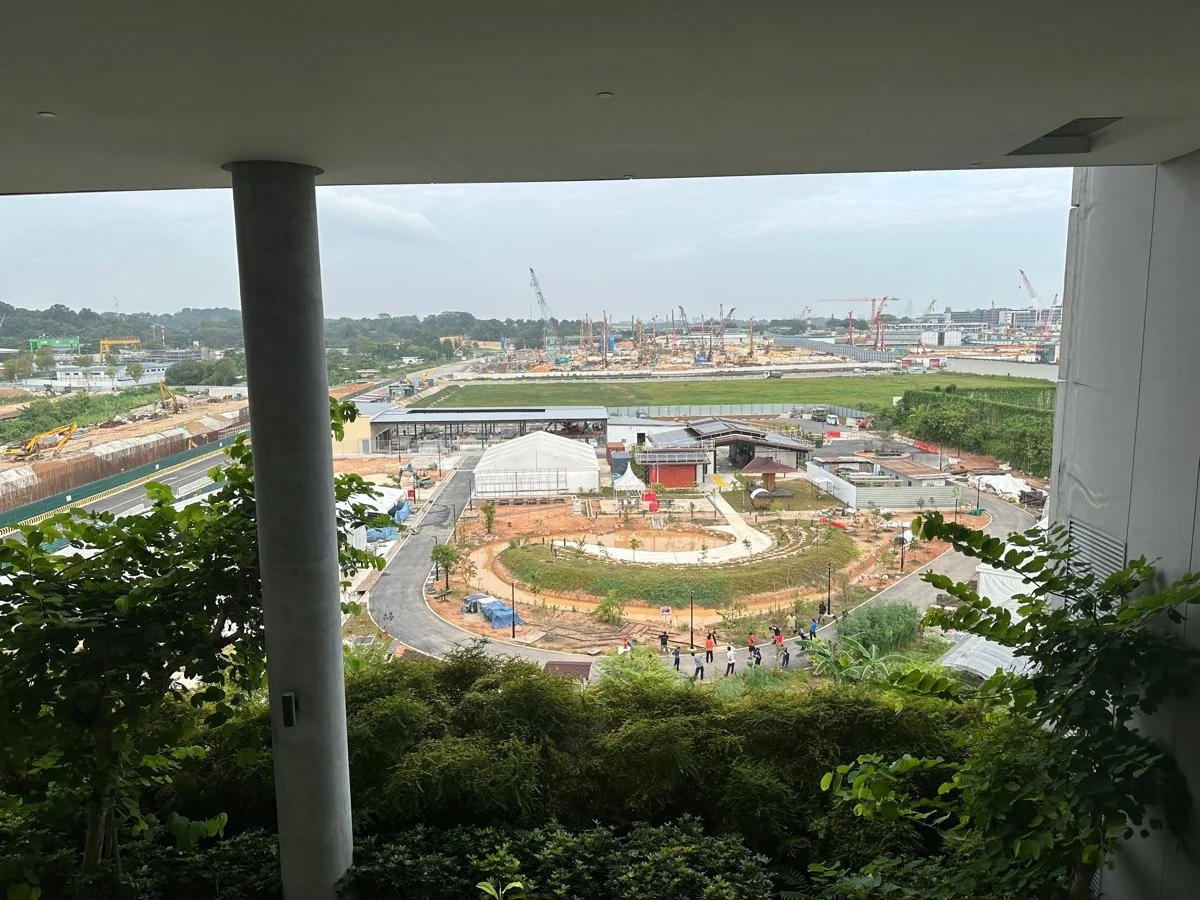
From this perspective, GUI's mission to promote a culture of Earth care and people care seems daunting. It is surrounded on all sides by construction sites. Cranes and bulldozers loom menacingly everywhere. From this height, it felt like GUI was trying to build a sandcastle that would soon be swept away by an incoming tide of development. Below us, GUI volunteers gathered for a group stretch. Bingyu sounded apologetic as he explained that this was a much-reduced number, as most were away to visit the Kongsi co-op in Malaysia.
My mood started to shift once we were down in the GUI site. We entered through a back entrance, a temporary shortcut in the midst of all the construction. Everywhere we went, Bingyu would draw our attention to one or another member of the GUI community, always with a friendly or gracious remark. He seemed to know everyone personally, as well as their unique story of how they came to volunteer at GUI. Bingyu has the remarkable quality of making everyone feel special.
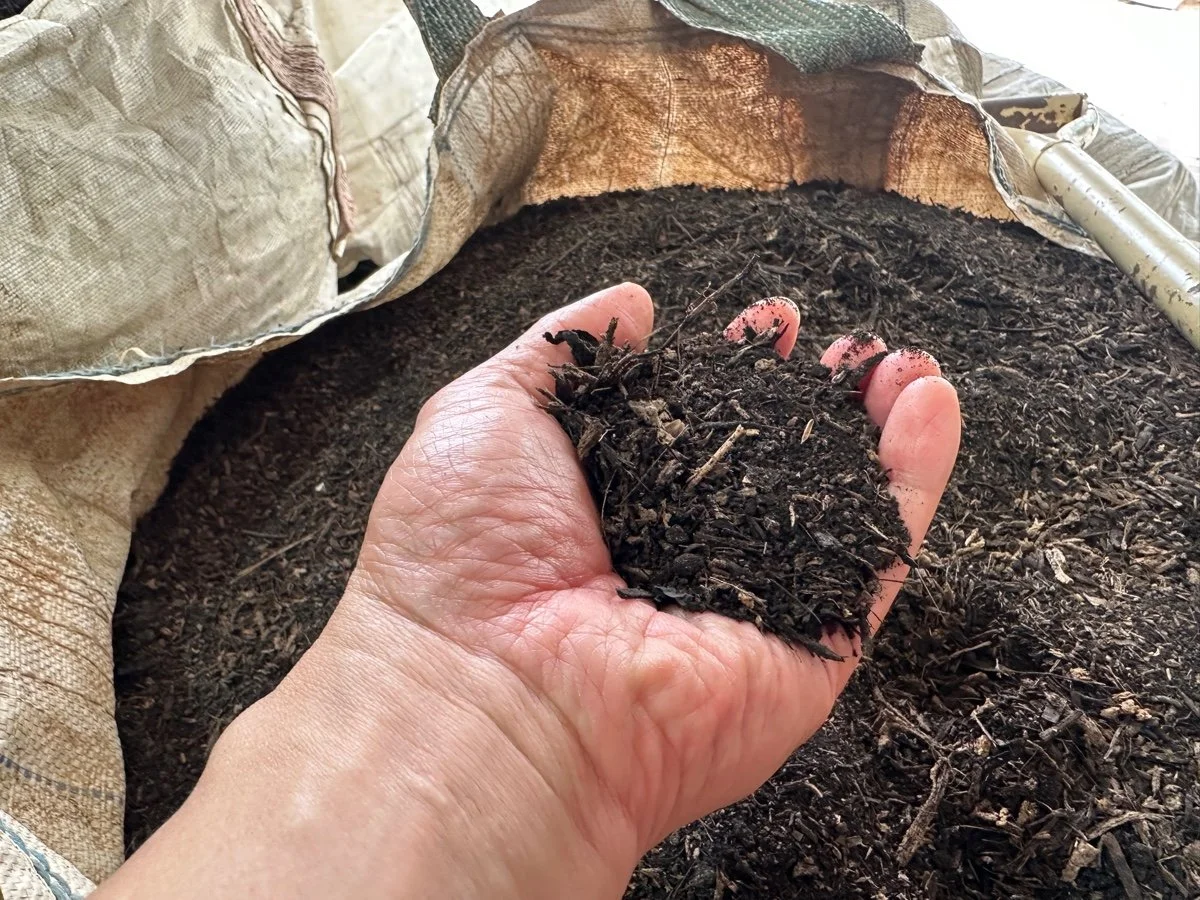
At one point we came across several large bags of compost. This was GUI's black gold, the fruit of much hard and loving labour by GUI's community. I picked up a handful. It was light and crumbly, just a little moist, with a pleasant earthy smell. I'm no compost expert, but even I knew that this was treasure. Seen from this scale, GUI's mission seemed to have already been achieved. We were surrounded by cheerful volunteers, who had gladly given up their Saturday to be here, in order to build good soil. I realised that how hopeful one feels about the world can often be a matter of choosing what scale to experience it at.
Everywhere we went, Bingyu had a story to tell. Every pocket of GUI is laden with meaning. Even its corporate sponsors seem to have been co-opted into its humanising mission. It's clear that Bingyu's moral compass prevents any individual or entity from dominating GUI's community. This allows every individual to feel that they matter. What's even more impressive, the age of volunteers ranged from teenagers to 80-year-old uncles driving tractors.
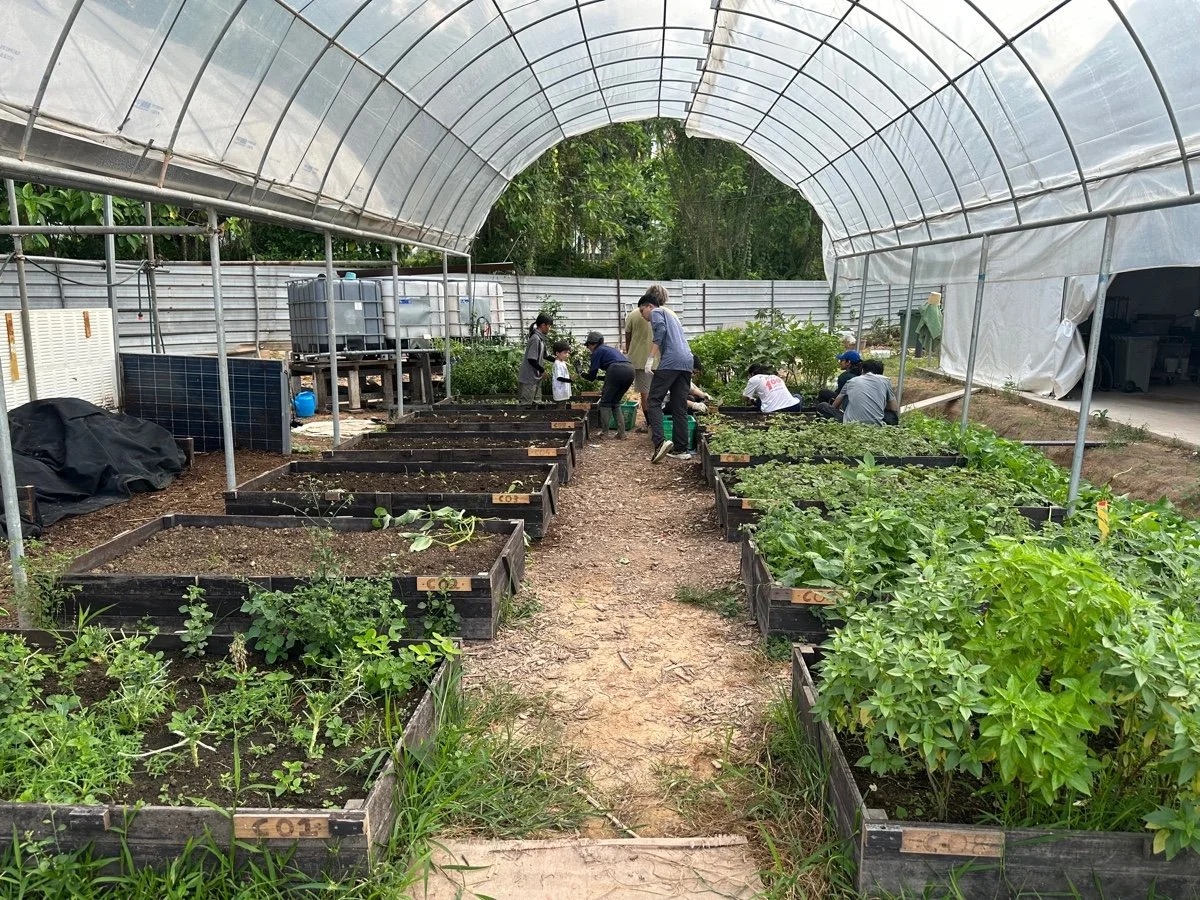
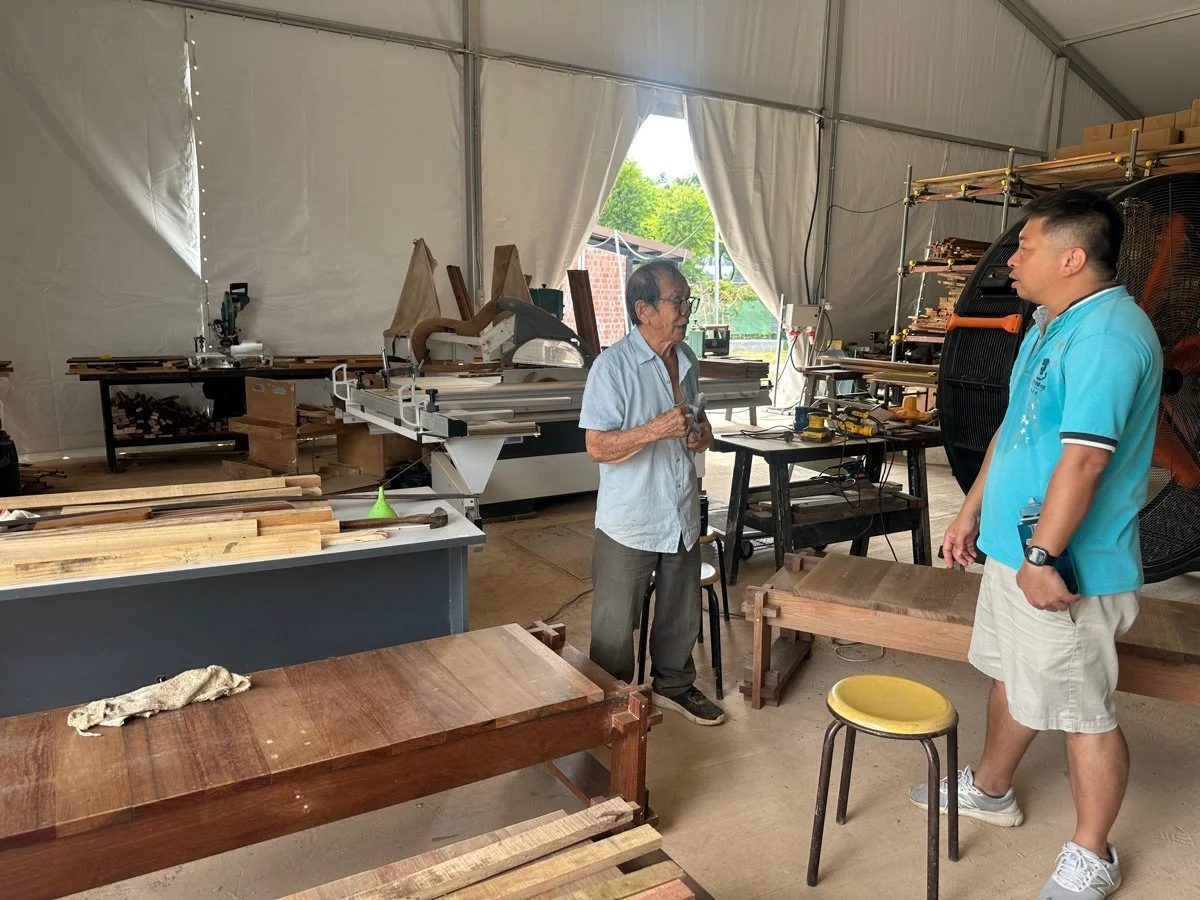
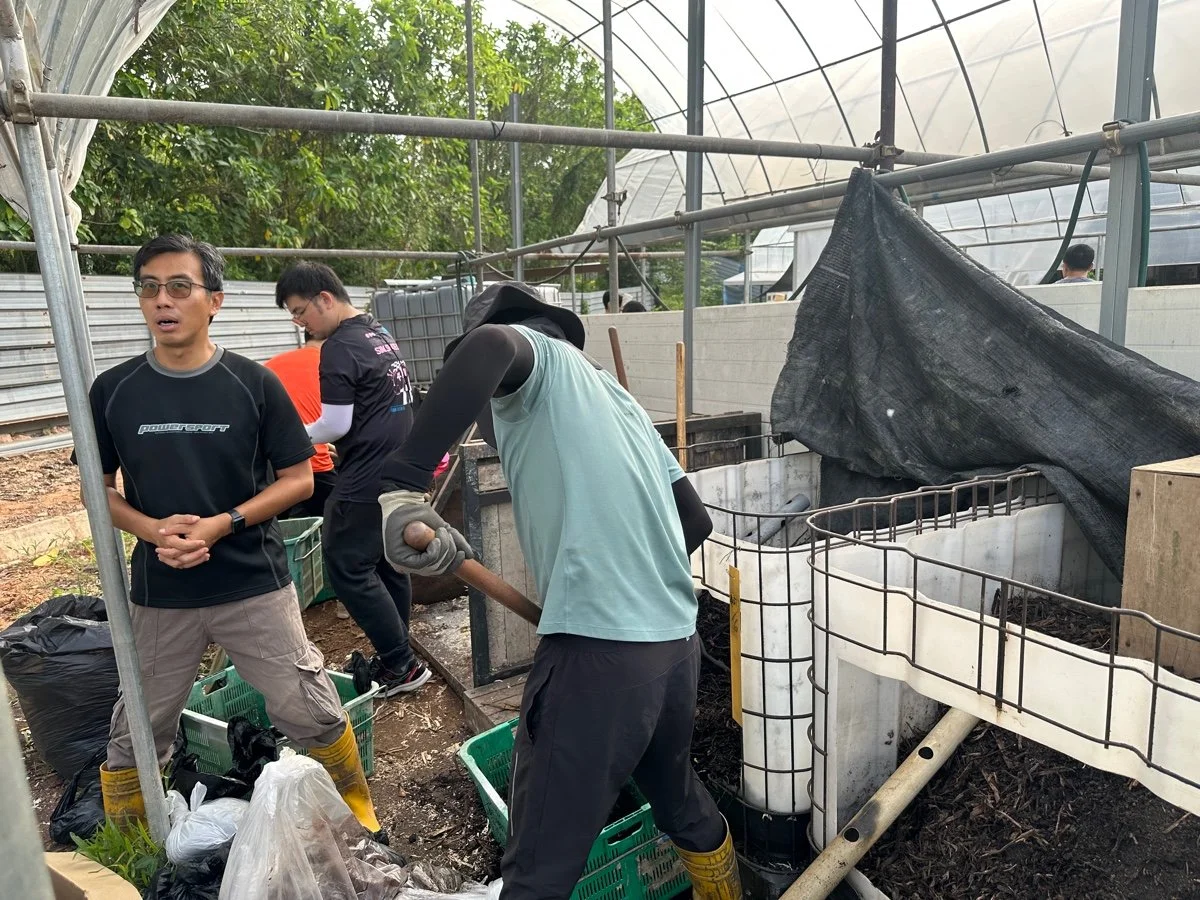
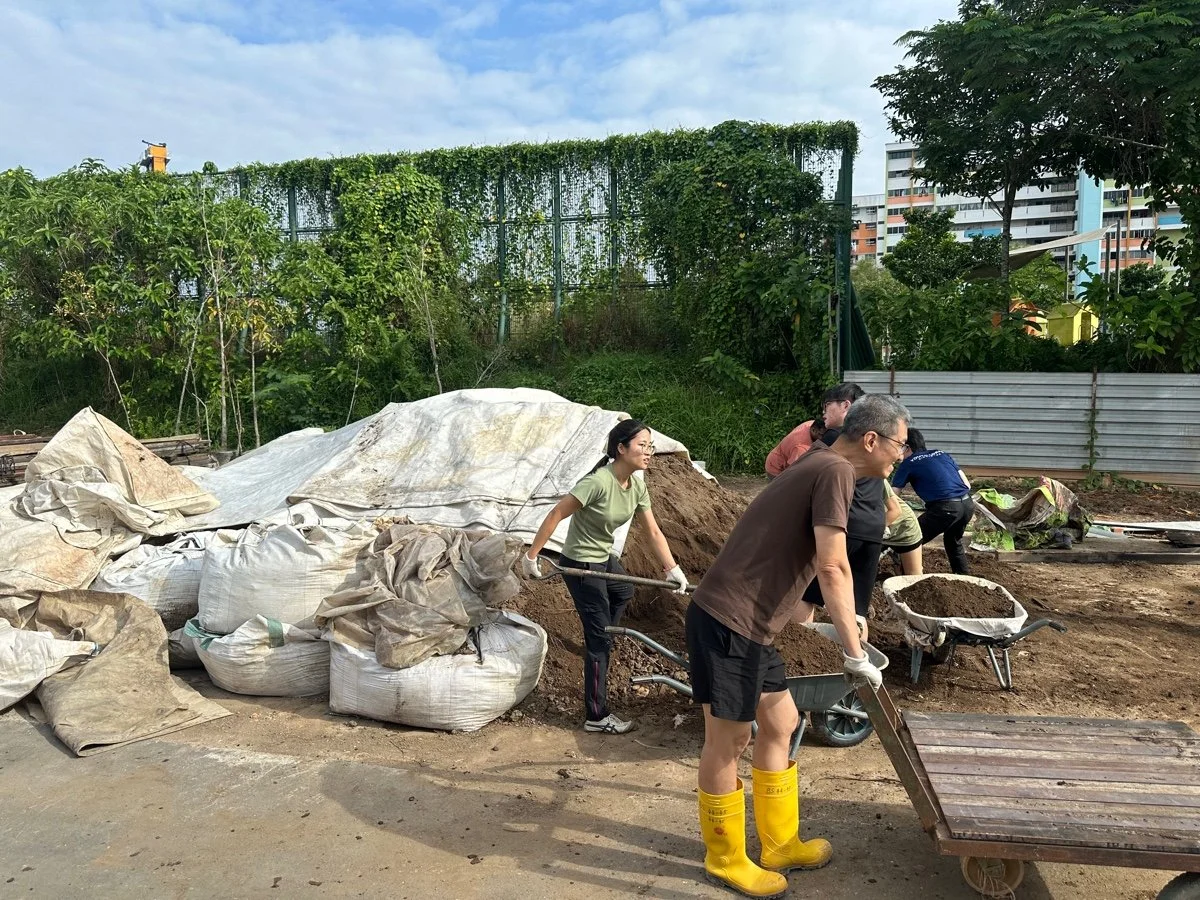
GUI's pared down volunteer shift seemed pretty lively to me. There was no dearth of activity no matter where one looked.
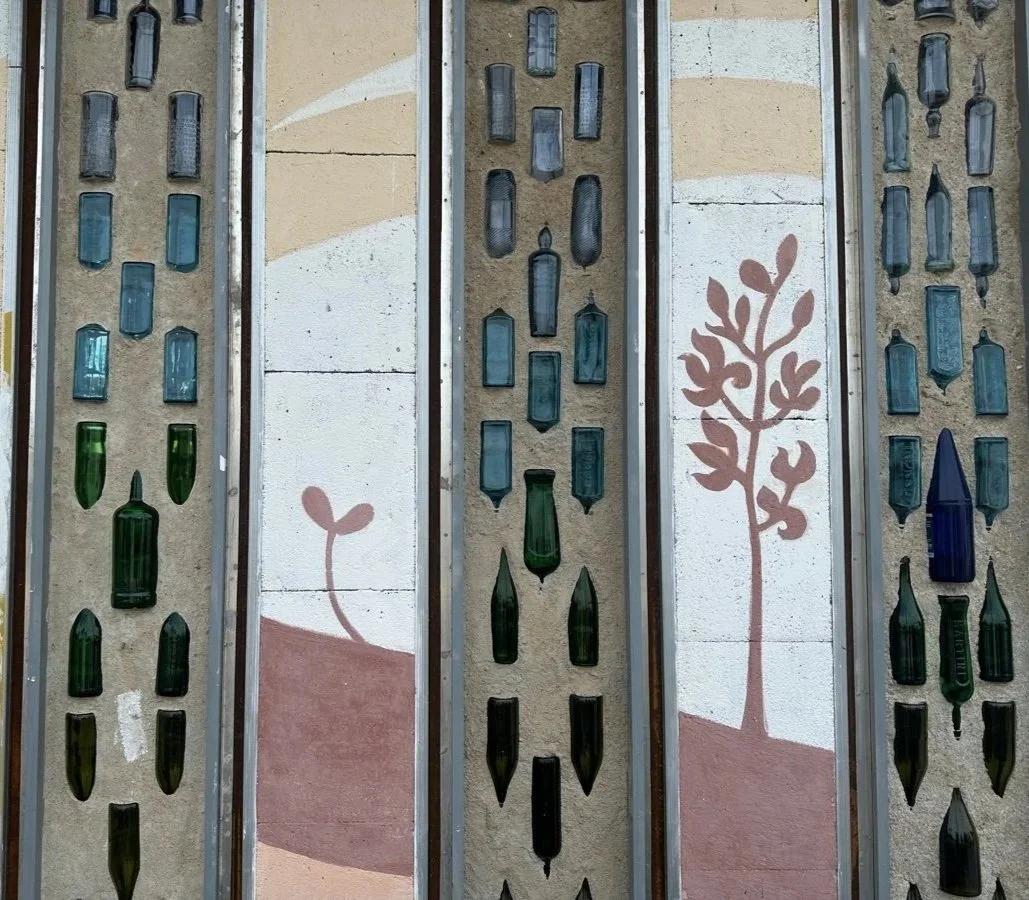
A mural made from earth pigments that shows a sapling growing into a plant over time. It is a vision of what GUI hopes to achieve over the next few years.
As we went through the tour, I was reminded of something told to me in 2013 by Monique Shiess, one of the co-founders of AfrikaBurn, a festival in South Africa modelled directly after Burning Man. We were in the Tankwa Karoo, a semi-desert area 4 hours north of Cape Town. I was asking her what made AfrikaBurn so special. She pointed at the multitude of art that had popped up over the past week, some small, others as tall as buildings, all of them created in fairly harsh desert conditions. She said that each work of art, each sculpture and structure, was a monument to human creativity and collaboration. That statement has stuck with me ever since. As I looked around GUI, I had the pleasant realisation that the same could be said of this place.
Like a well-spun narrative come to a fitting conclusion, we ended our tour at the amphitheatre facing the pond at the heart of GUI. Bingyu explained that they were busy figuring out a natural filtration system for the pond, and that eventually he hoped the water would be clear enough to swim in.
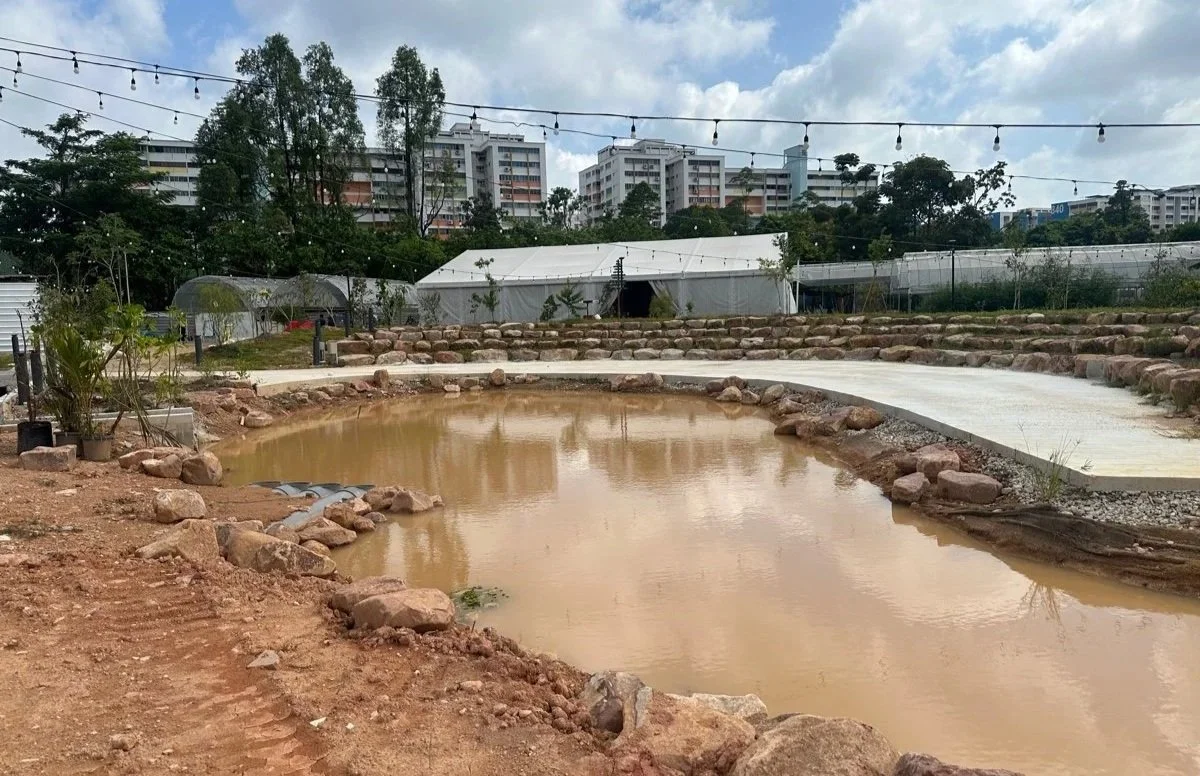
From a slightly different angle, I saw a juxtaposition that perfectly illustrated what I was feeling, and slowly finding the words to describe for myself.
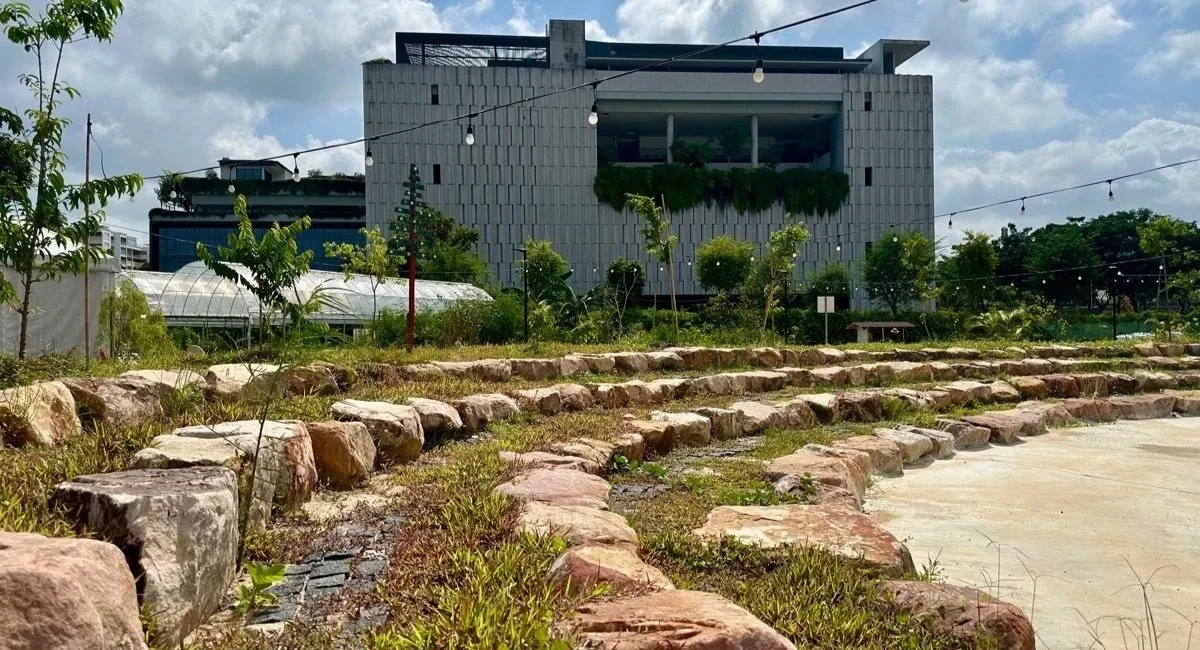
This picture encapsulates why I feel GUI's existence is so necessary. The contrast between background and foreground couldn't be more telling.
In the background, we have the HomeTeamNS building. It is an extravagant hybrid of clubhouse and mall for Singapore's National Servicemen. If anything, it is a monument to what the Singapore government can do with all its economic and political resources. It was no doubt built on the backs of migrant labour from Bangladesh and other countries. Associated with the military, it is a symbol of patriotism. While impressive, it leaves the individual feeling somewhat diminished.
In the foreground is GUI's outdoor amphitheatre built by volunteers. Bingyu explained how they had to lay all the stones in a line from smallest to biggest, so that they could be entered into a 3D software and virtually re-arranged to form 4 evenly spaced rows of curves. The volunteers then had to manually move them into place according to the 3D design. It is nothing less than a monument to human cooperation. It is human-friendly in scale. It leaves the individual feeling that they could be more than just a cog in a vast machine; it brings the deep nourishment of the village within hand's reach, and one can imagine it as a site of entertainment that no one has to pay for.
There is something about the human psyche that needs monuments. Turkey's Göbekli Tepe is considered to be humanity's oldest monument complex, dating over 11,000 years ago. It predates the rise of agriculture and fixed settlements. Most experts think it is a temple complex. Monuments give tangible shape to our deepest yearnings. They help organise our social behaviour. Which is why we must give some thought to what kinds of monuments we surround ourselves with, especially the youngest members of our communities, who will carry those imprints with them their entire lives.
Riane Eisler wrote about the need to shift culture away from a domination paradigm, in which we see vast concentrations of wealth and power, and towards a partnership paradigm, in which we form egalitatrian relationships of care and reciprocity. From this perspective, there is little difference between communism and capitalism, the big competing ideologies of the 20th century. They both operate from the domination paradigm.
What's clear is that GUI's space is filled with monuments that belong within the partnership paradigm. It's estimated that about 150,000 volunteers have passed through GUI over the years. That is a consequential number. Each of one of those volunteers has been given a glimpse into the Imaginal, where a different world is possible. And each of those volunteers carries the seed of that possibility out into the world with them.
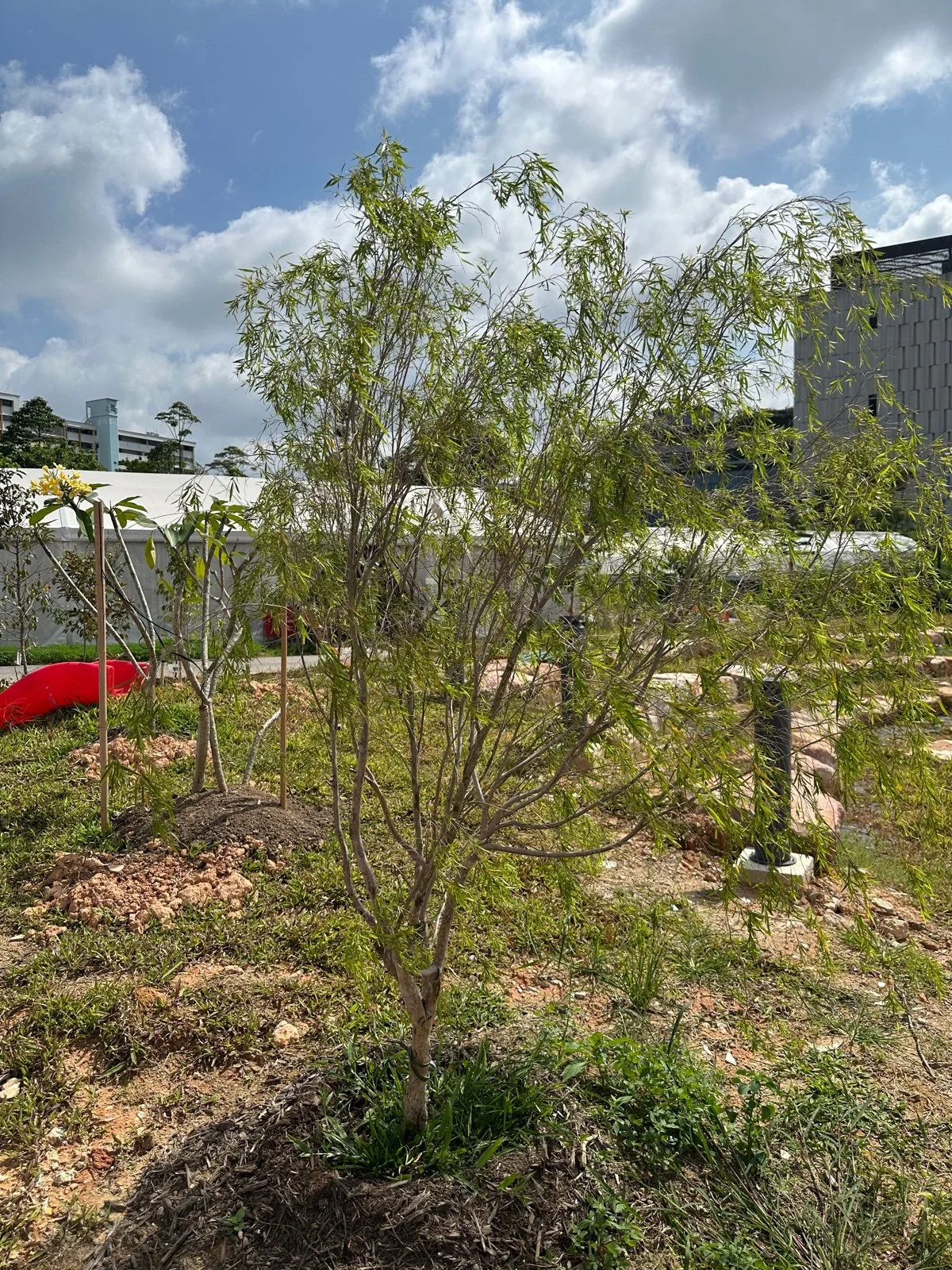
A willow tree planted by our hands-on Mana Impact team!